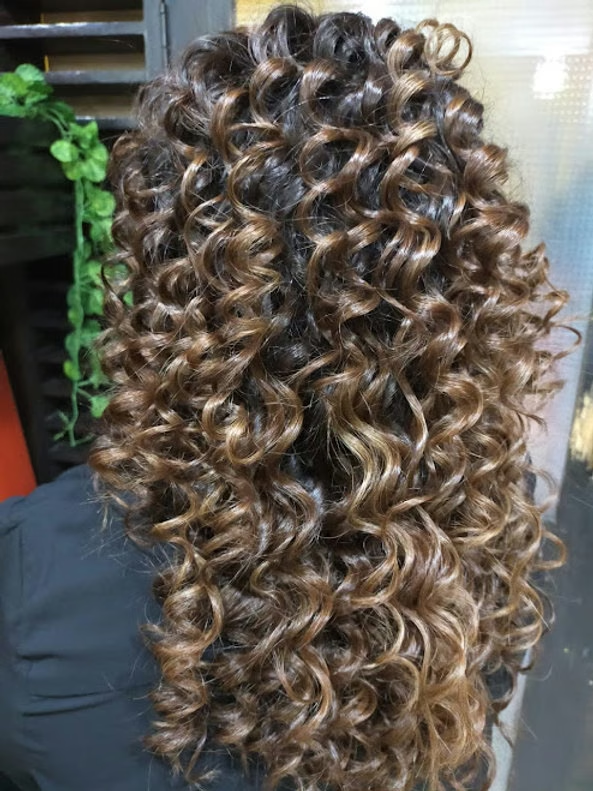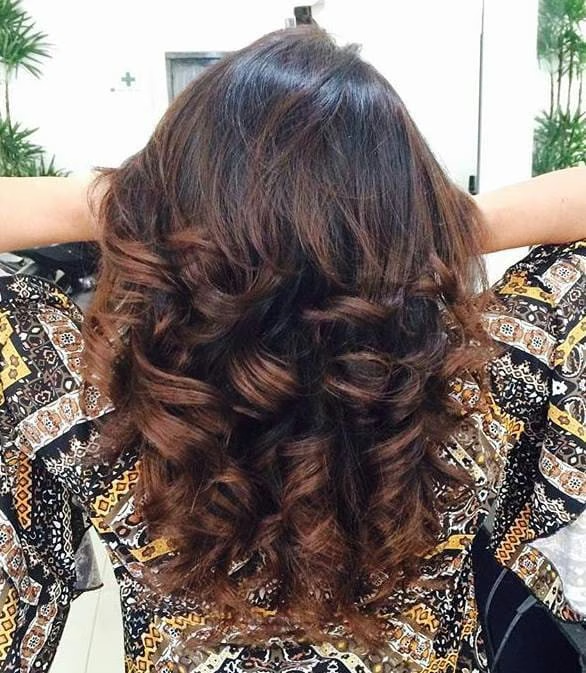

Modern perms can create anything from soft movement and loose waves to much more defined curls.
The important part is choosing a curl pattern that works with your existing hair rather than simply choosing the tightest or most dramatic curl from a photograph.
At Salon Nayana Bangalore, we consider your natural texture, hair condition, length, density, previous chemical services and the result you want before recommending a perm.
A perm is a chemical service. Hair that is heavily bleached, fragile or recently chemically treated may not be suitable.
What is a hair perm?
A perm changes the structure of the hair so it holds a new curl or wave pattern.
Hair is wrapped around rods or formers according to the desired curl size and then treated using the perming process.
The size and placement of the curl, together with the haircut itself, determine whether the finished result looks like loose movement, waves, defined curls or a much tighter pattern.
What kind of curls can a perm create?
Soft waves
A softer option for someone who wants movement and body rather than an obviously curled hairstyle.
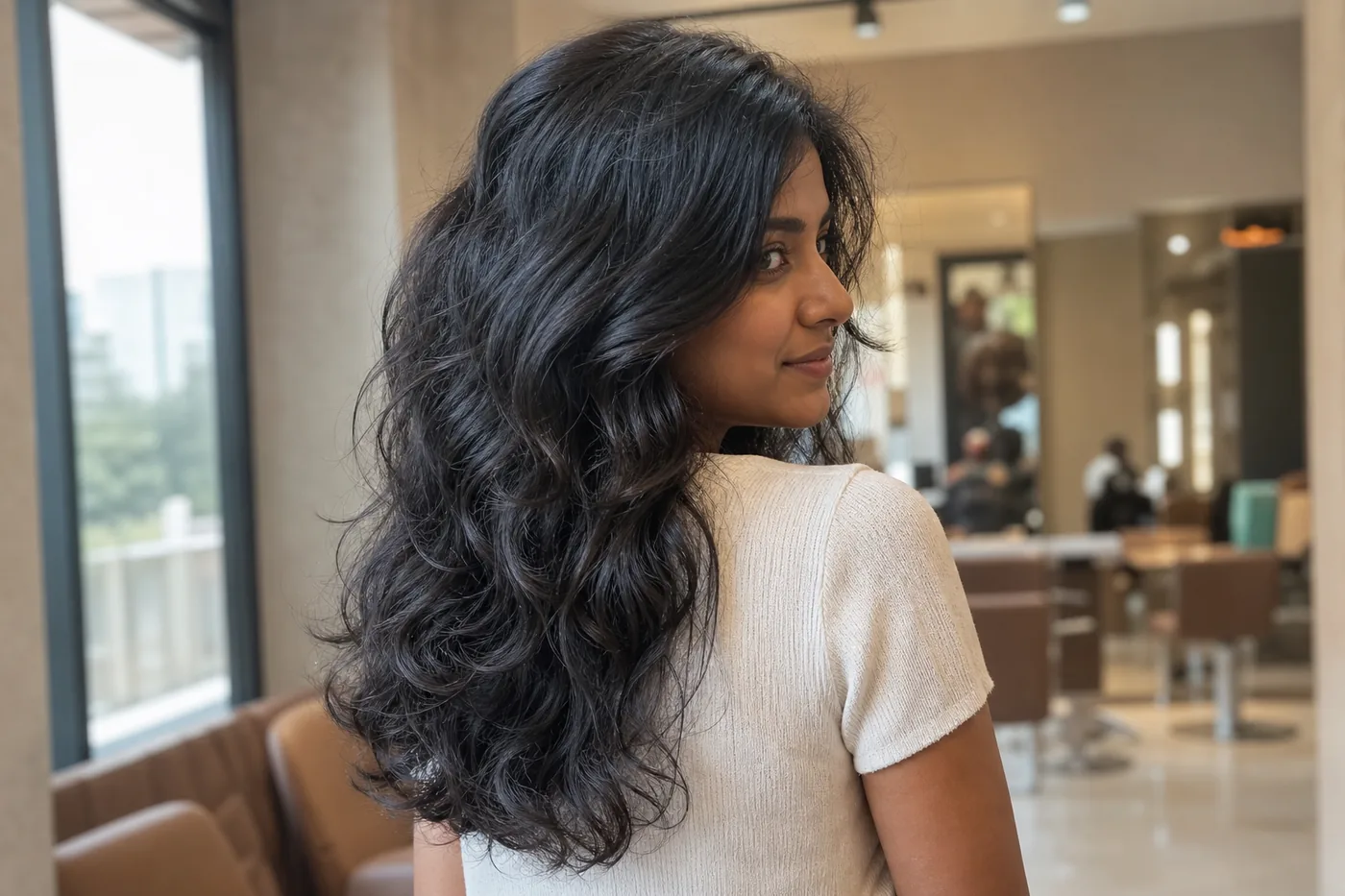
Loose curls
Larger curls give the hair more movement while retaining a relaxed shape.
Defined curls
Smaller curl patterns create a stronger and more visible transformation.
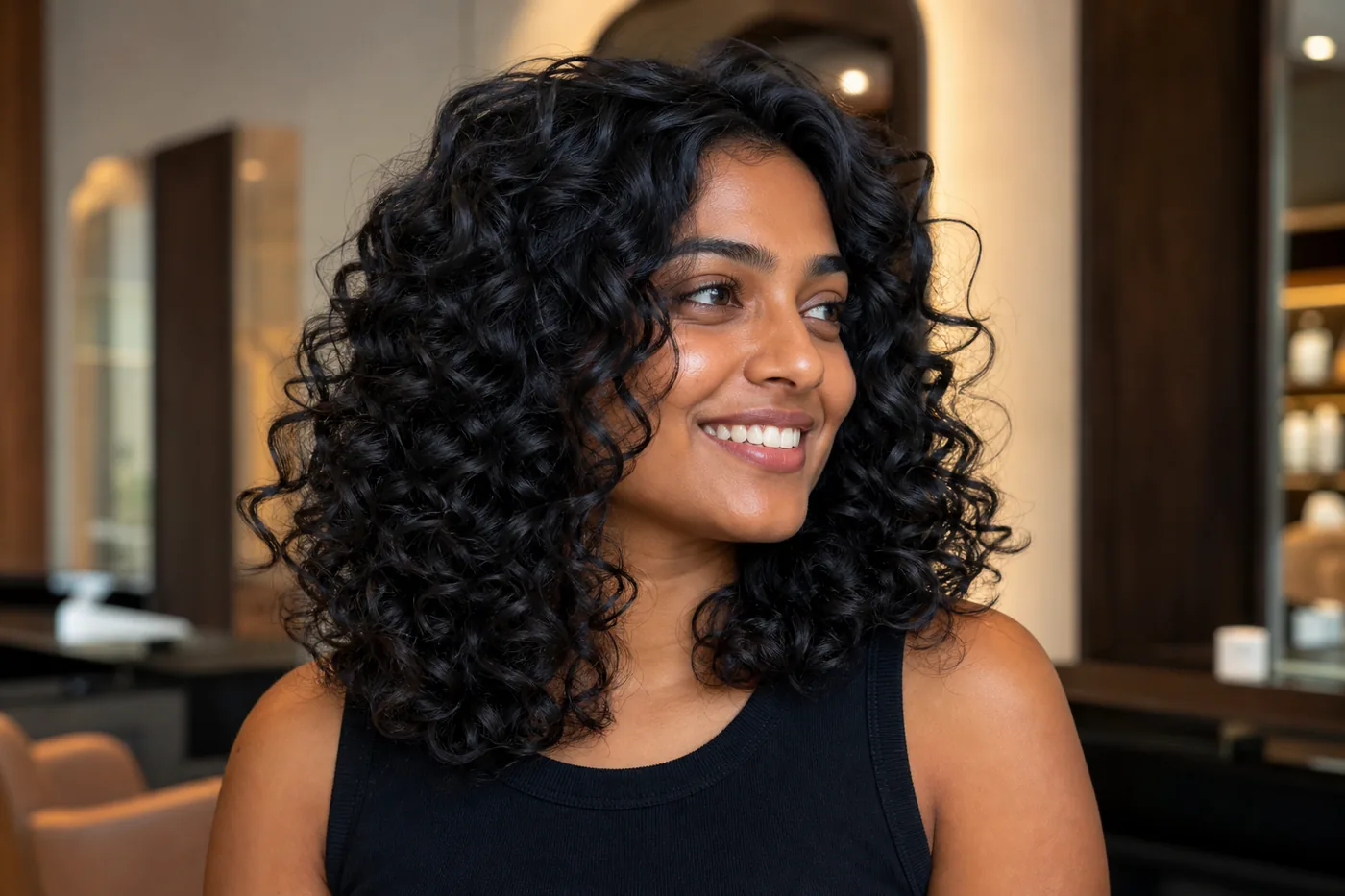
Volume and movement
Perming does not always have to produce a tightly curled result. Depending on the hair, it can also be used to create volume, shape and movement.
How we decide whether to perm your hair
Before recommending the service, we consider:
- Previous bleach or colour history
- Hair strength and porosity
- Natural texture and density
- Desired curl size and maintenance
Please tell the stylist about previous chemical services even if they were done several months ago.
What happens during a perm consultation?
Start by showing us the result you want.
Reference photographs are very useful.
We then look at your current hair and discuss what can realistically be achieved.
The curl pattern shown in a photograph may need to be adjusted because the final result depends heavily on your starting texture, density and condition.
If we do not believe your hair is suitable for the service, we would rather tell you before beginning.
What happens during the perm?
The exact process varies according to your hair and the desired result, but generally includes:
- Consultation and assessment
- Preparation and sectioning
- Wrapping the hair to establish the curl pattern
- Perming process
- Neutralising and setting the new structure
- Finishing and styling
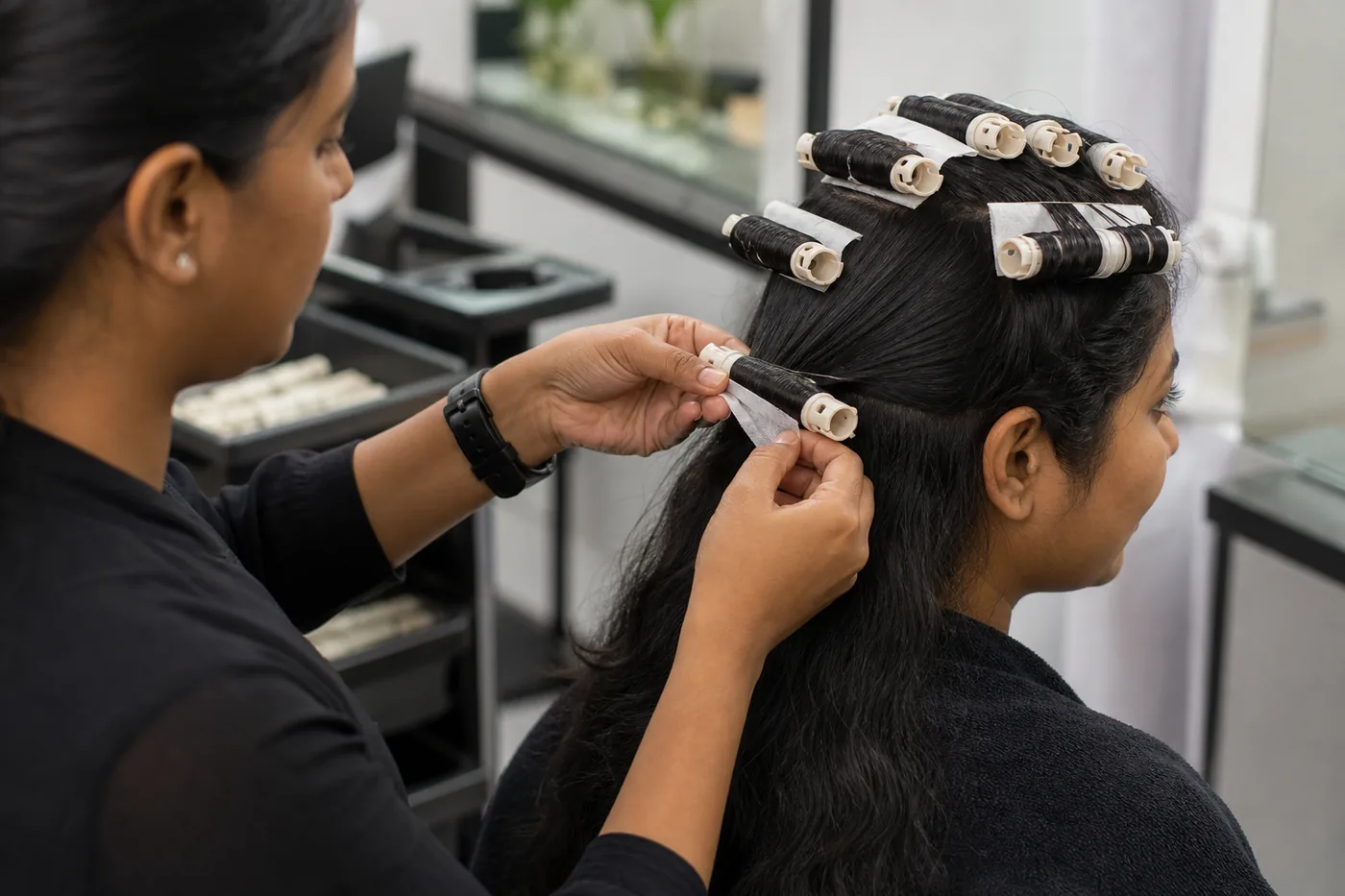
The stylist will explain the process relevant to your particular service.
How long does a perm last?
The treated section of hair remains chemically altered, but the overall appearance changes over time.
New hair grows with your natural texture and the curled hair can gradually relax depending on your hair, maintenance and curl pattern.
Your stylist can give you a much more useful expectation after examining your hair.
Looking after permed hair
Permed hair usually benefits from gentler treatment.
Avoid unnecessarily harsh cleansing and excessive heat.
Conditioning becomes particularly important because the hair should remain flexible and manageable.
Your stylist can also explain how to dry and style your particular curl pattern without pulling it out of shape.
For more texture-specific advice, read our guide to curly and wavy hair.
Can coloured hair be permed?
Sometimes, but not automatically.
The answer depends on what colour service has been performed, the strength of the hair and its chemical history.
Bleached or highly compromised hair requires particular caution.
This is something that should be assessed rather than guessed.
How much does a perm cost at Salon Nayana Bangalore?
Perming starts from ₹10,000.
The final price depends on hair length, density and the work required.
The price will be confirmed during consultation.
See our current haircuts, styles and treatments prices.
Should I get a perm?
A perm can be a good choice if you genuinely enjoy wearing your hair with movement or curl and want that texture to remain after washing.
It may not be right if the condition of your hair makes another chemical service unwise or if you actually prefer changing between straight and curly styles frequently.
The consultation is there to work that out before anything is done.